
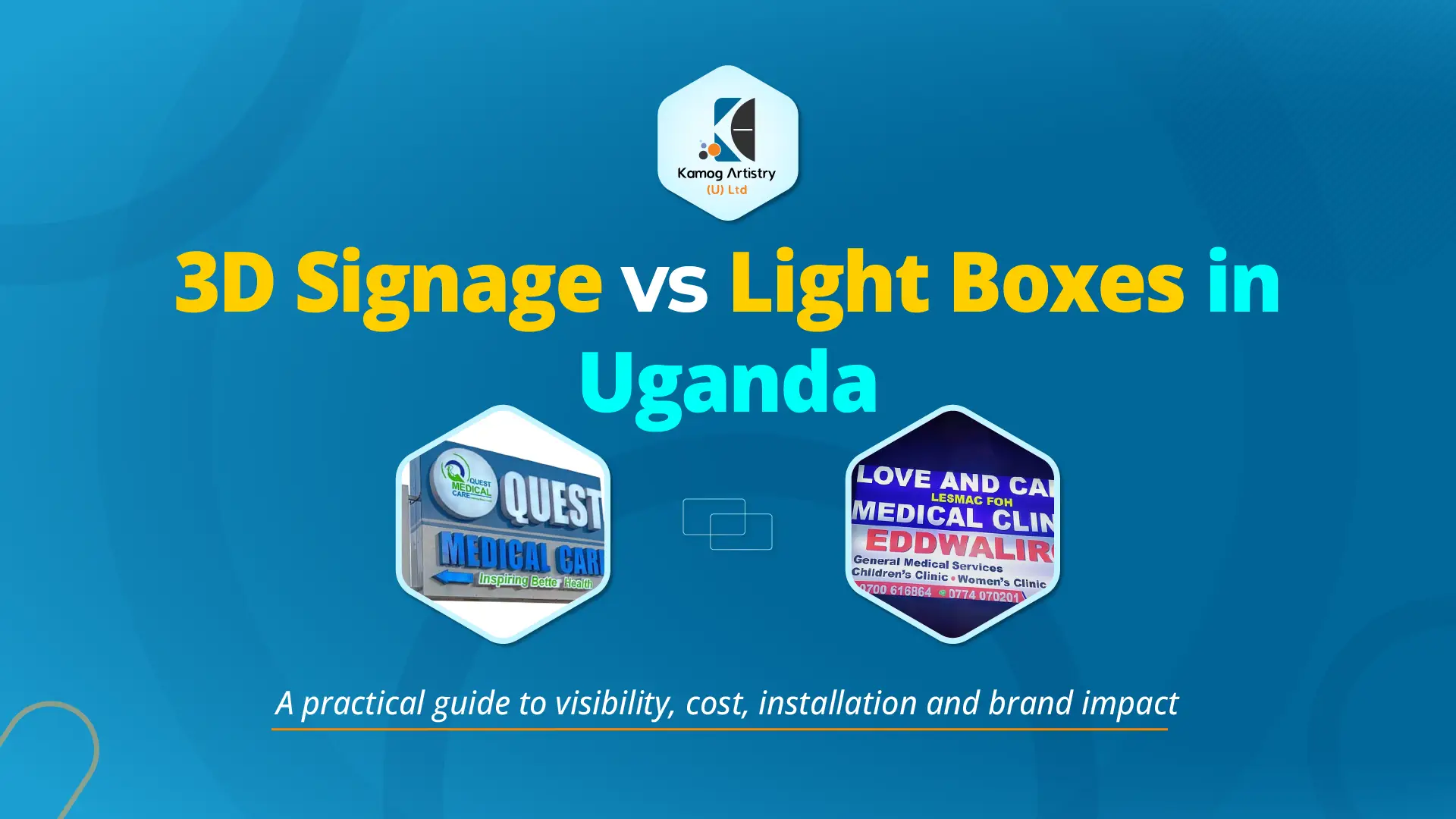
Businesses often ask this question as if it has one universal answer. It does not. A pharmacy on a busy road may benefit more from a light box because visibility after dark matters. A corporate office may prefer 3D signage because the priority is a more premium and established appearance. A retail brand may even combine both. If you need tailored project support, our Signage & Branding Kampala, Outdoor Advertising Kampala, Event Branding Kampala and Vehicle Branding Kampala services are the most relevant starting points.
How This Guide Fits Into The Bigger Picture
This guide helps readers compare two of the most requested sign formats in Uganda. Some businesses are trying to choose one of them for a new storefront. Others already know they need visibility, but are not yet sure whether the final solution should be dimensional, illuminated or part of a wider rollout.
A useful starting point
If you already know the project is about business frontage or signage visibility, start with our Signage & Branding Kampala hub.
When visibility extends further
Some projects also connect naturally with Outdoor Advertising Kampala, Event Branding Kampala and Brand Rollout Management Kampala.
When brand structure still matters
If the sign should reflect a stronger identity system first, our Corporate Brand Identity Design Kampala, Brand Guidelines Design Kampala and Logo Design Kampala services become important.
1. What 3D Signage Means in Practical Terms
3D signage uses dimensional letters, logos or shapes that project outward from the surface rather than sitting flat like a standard printed board. That depth is exactly what gives it its stronger premium feel. The sign becomes more architectural and more integrated into the frontage or wall instead of reading like a simple panel.
3D signs can be made in different ways. Some are simple raised acrylic or PVC forms mounted on a backing. Others are fabricated more heavily using acrylic faces, metallic finishes or built-up channel forms. Some may include lighting, but many still work well without it if the location already has strong daylight or good ambient visibility.
This makes 3D signage especially attractive for office frontages, reception branding, hospitality spaces, institutions and businesses that want a more established appearance. Where the goal is visual status and strong brand presence, 3D signs often feel more premium than a standard flat sign.
2. What a Light Box Does Better Than a Non-Lit Sign
A light box is a sign with internal illumination, usually designed to display a printed face or translucent panel that stays visible both during the day and at night. This makes it one of the most practical options for businesses that operate into the evening or sit in areas where visibility must hold up after daylight fades.
Light boxes are especially common for pharmacies, retail shops, bars, restaurants, salons, convenience outlets and businesses along busy commercial streets. The reason is simple: they communicate clearly from a distance and they keep working after sunset. For some businesses, that advantage alone outweighs the more premium look of 3D signs.
Light boxes can still look strong and professional, but their main strength is usually function. They are built to be seen. Where a business needs a bright face that stands out in mixed lighting conditions, a light box often performs better than a non-lit dimensional sign.
3. Which One Looks More Premium?
If the question is purely about premium visual impact, 3D signage usually has the advantage. Depth changes how people perceive the sign. Raised letters or a dimensional logo feel more deliberate, more finished and often more expensive in the best sense of the word. They can make an office, showroom or corporate frontage feel better established even before someone enters the space.
This is one reason 3D signage is popular in reception areas, boardrooms, office corridors and company entrances. It helps the business appear more anchored and intentional. Where brand perception is central to the client experience, this added depth can be a very worthwhile investment.
That said, premium is not always the main goal. A shop that depends on quick recognition from passing traffic may not benefit from premium styling as much as it benefits from being visible instantly. So while 3D often wins on appearance, that does not automatically make it the better sign for every business.
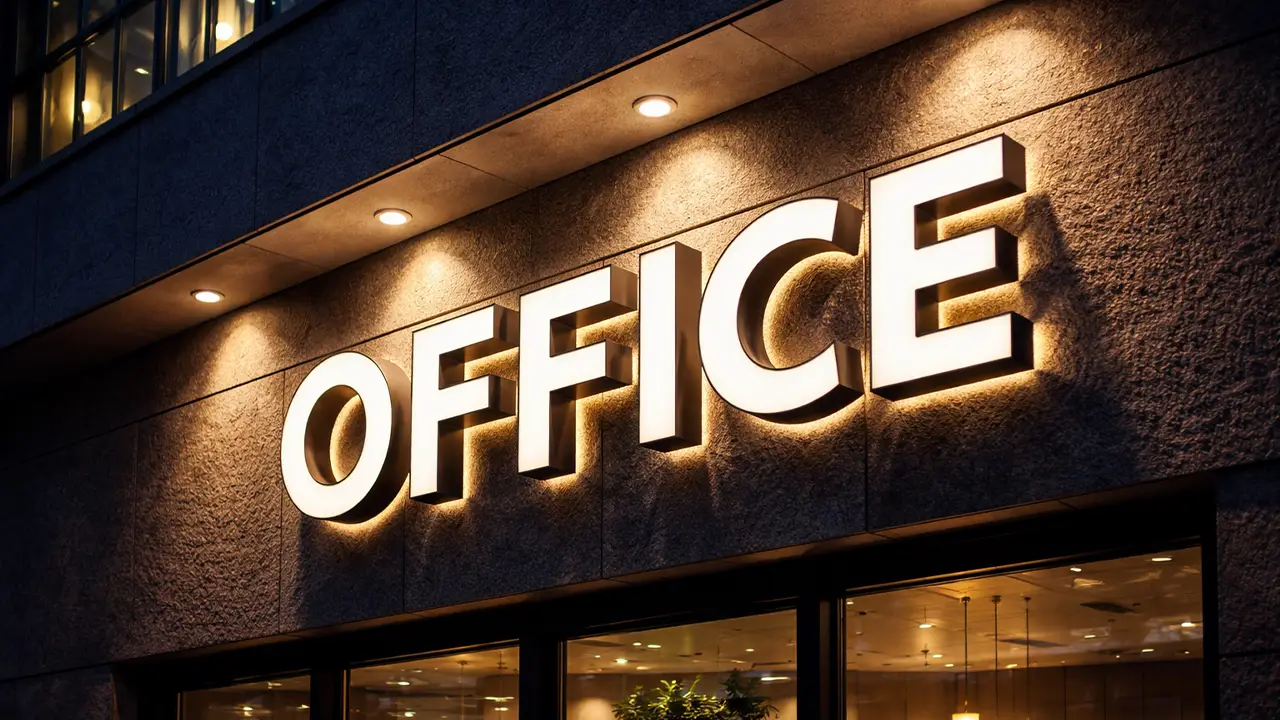
4. Which One Is Better for Visibility?
If visibility is the top priority, especially in the evening, light boxes usually take the lead. Their internal illumination makes the sign readable in low-light environments and helps the business stay visible even when surrounding conditions are less favorable. This is particularly useful for businesses near busy roads, trading centers or urban streets where other visual distractions compete for attention.
During the day, both sign types can work well, but the strength of the light box becomes more obvious after dark or in shadow-heavy locations. If your business depends on people finding it quickly from a distance, or if you operate into the evening, illumination often matters more than dimensional elegance.
That is why pharmacies, eateries, bars, mini markets and roadside shops often lean toward light boxes. Where visibility needs to remain constant throughout the day, the illuminated face gives a practical edge that a non-lit sign may not match.
5. Which One Usually Costs More?
There is no fixed rule that 3D signage always costs more or that light boxes are always cheaper. It depends on how each one is built. A basic 3D sign made from lighter materials may cost less than a more heavily fabricated illuminated light box. On the other hand, a premium 3D build with cleaner finishes, larger depth and more refined fabrication can cost more than a straightforward light box.
What changes the price most is the build method. 3D signage becomes more expensive as material quality, finish level and fabrication complexity go up. Light boxes become more expensive once frame depth, internal lighting, power preparation and installation complexity increase. This is why size alone is never enough to compare quotes fairly.
If budget is a major factor, the most useful approach is not to ask which sign type is “cheaper” in general, but which sign type gives the better result for your actual business need. A cheaper sign that underperforms is not a cheaper decision in the long run.
6. What About Maintenance and Long-Term Use?
3D signage often has a simpler maintenance profile when it is non-lit. It usually needs basic cleaning and occasional inspection, especially for outdoor applications. There are fewer internal components to worry about if the sign does not rely on illumination.
Light boxes add another layer because lighting systems and electrical parts may eventually need attention. That does not mean they are a poor choice. It only means the maintenance expectations are different. If the business benefits heavily from illumination, then that extra upkeep is often reasonable.
Durability also depends on where the sign is installed, what materials were used and how well the installation was handled. Outdoor-facing businesses should pay attention to weather resistance, water protection, cleaner sealing and the overall build quality rather than assuming one sign category is automatically more durable than the other.
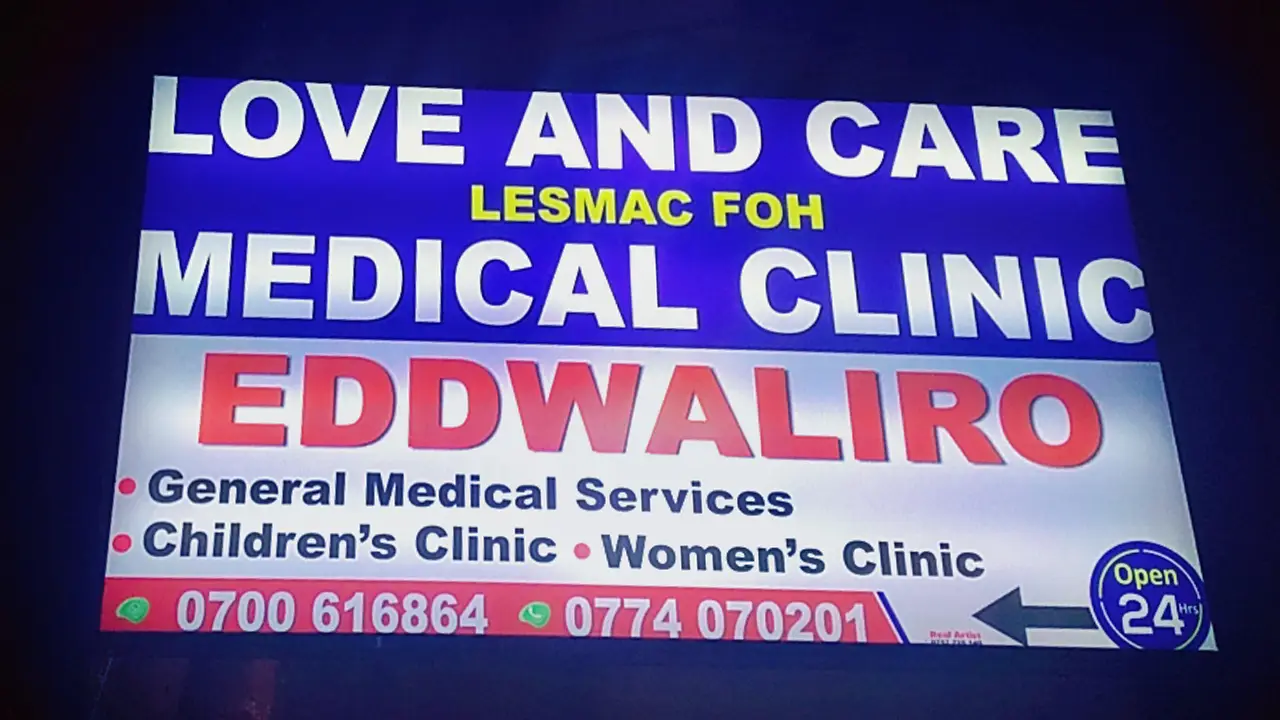
7. Which One Fits Which Kind of Business?
Business type matters more than many people expect. A pharmacy often benefits strongly from a light box because clarity and visibility are essential, especially in the evening. A legal office, consulting firm or engineering company may lean toward 3D signage because the priority is trust, polish and professional presentation. A hotel or hospitality space may combine both depending on where the guest journey begins.
Retail shops usually need visibility first. Corporate offices often need appearance first. Reception spaces nearly always benefit from dimensional branding. Busy commercial streets usually reward illumination. A mall frontage may require something different from a standalone roadside building. This is why the “better” option is always tied to context.
If the project includes more than one touchpoint, the final answer may not be either-or. A business can use a light box outside for visibility and 3D signage inside for brand experience. Where wider implementation is needed, our Brand Rollout Management Kampala service helps connect the decisions across multiple spaces.
8. Installation Differences Matter Too
Both sign types can become more expensive or more complicated depending on installation conditions. A sign mounted low on a clean wall is simpler than one fixed at height, on an uneven surface or in a location with restricted access. But each type also has its own installation considerations.
3D signage often needs precise alignment because each letter or element must sit cleanly and evenly. Light boxes may require more structural depth, electrical planning and secure support for their frame. If the wall is weak, if power is not already nearby, or if height access is difficult, the quote can change quickly.
This is why site photos are always useful when requesting a quote. The sign type is only part of the cost. The wall, the access, the mounting height and the existing electrical conditions are also part of the project.
9. Which One Supports Brand Perception Better?
This question matters because signage is not only about identification. It is also about how the business feels to someone seeing it for the first time. A 3D sign can communicate structure, confidence and permanence. A light box can communicate accessibility, clarity and strong public-facing visibility. Neither message is wrong. The issue is which message fits your business better.
If your brand already has a strong identity system, the sign should reflect that rather than work against it. A company with a refined visual system may get more value from dimensional signage because it supports brand character. A high-traffic consumer-facing business may prioritise legibility and reach instead. When those decisions are not clear, the sign can end up feeling disconnected from the business itself.
For businesses still strengthening their visual system, our Corporate Brand Identity Design Kampala, Brand Guidelines Design Kampala and Logo Design Kampala services can help create a stronger foundation before signage is fabricated.
10. When It Makes Sense to Use Both
Some businesses do not actually need to choose only one. They need each format in the right place. For example, a light box may work better on the exterior where day-and-night visibility matters, while 3D signage may be the stronger choice inside at the reception or on a feature wall. This approach lets the business benefit from both function and premium presentation.
The same applies to event spaces, mall outlets, medical businesses, hotels and branch networks. One sign type may handle quick recognition, while the other supports brand image once people are closer to the space. In many cases, the smartest signage decision is not about one winner. It is about the correct role for each format.
If your project stretches into a fuller visibility system with reception branding, wall branding, event displays, merchandise or printed support materials, it may also connect naturally with Event Branding Kampala, Custom Merchandise Uganda, Branded Stationery Uganda and Printing Services Kampala.
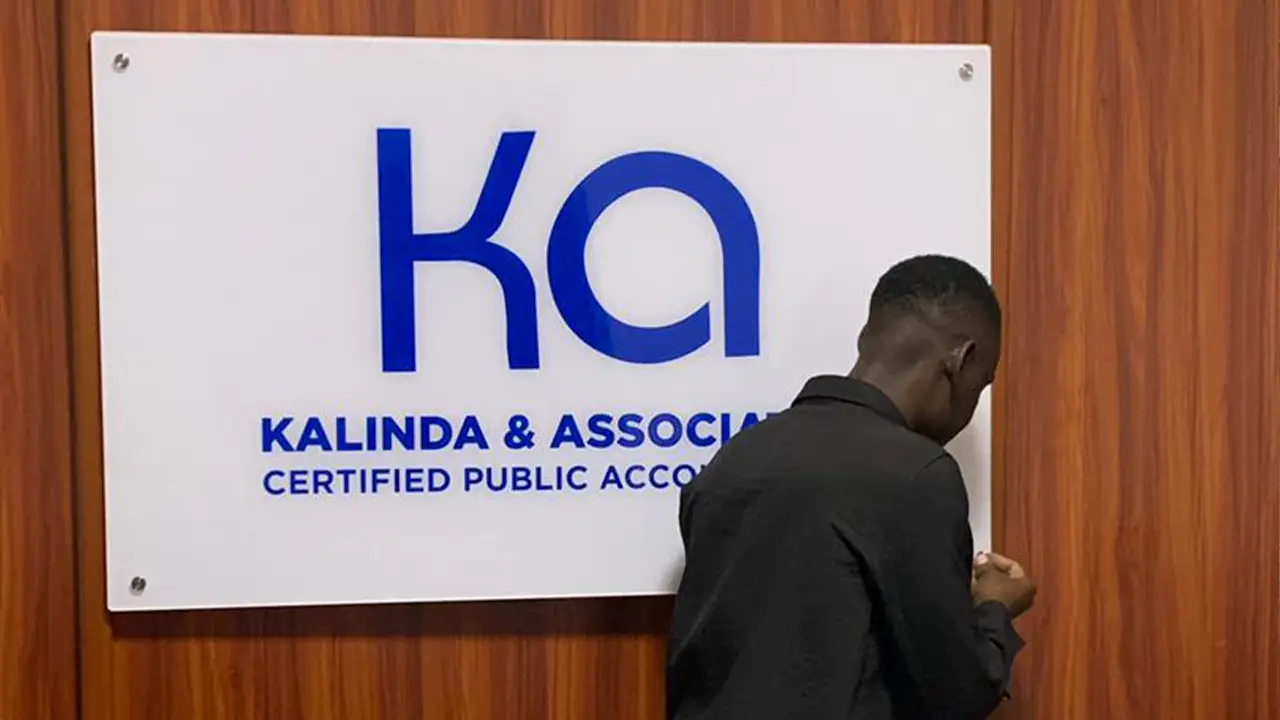
Need help deciding between a 3D sign and a light box?
If you already know your business needs stronger visibility but are not yet sure which sign format matches the location, budget and brand image best, we can help you choose the right route before fabrication starts.
Relevant Case Studies From Our Portfolio
These examples are especially useful because they show how signage decisions connect to real brand environments instead of being treated as isolated sign purchases.
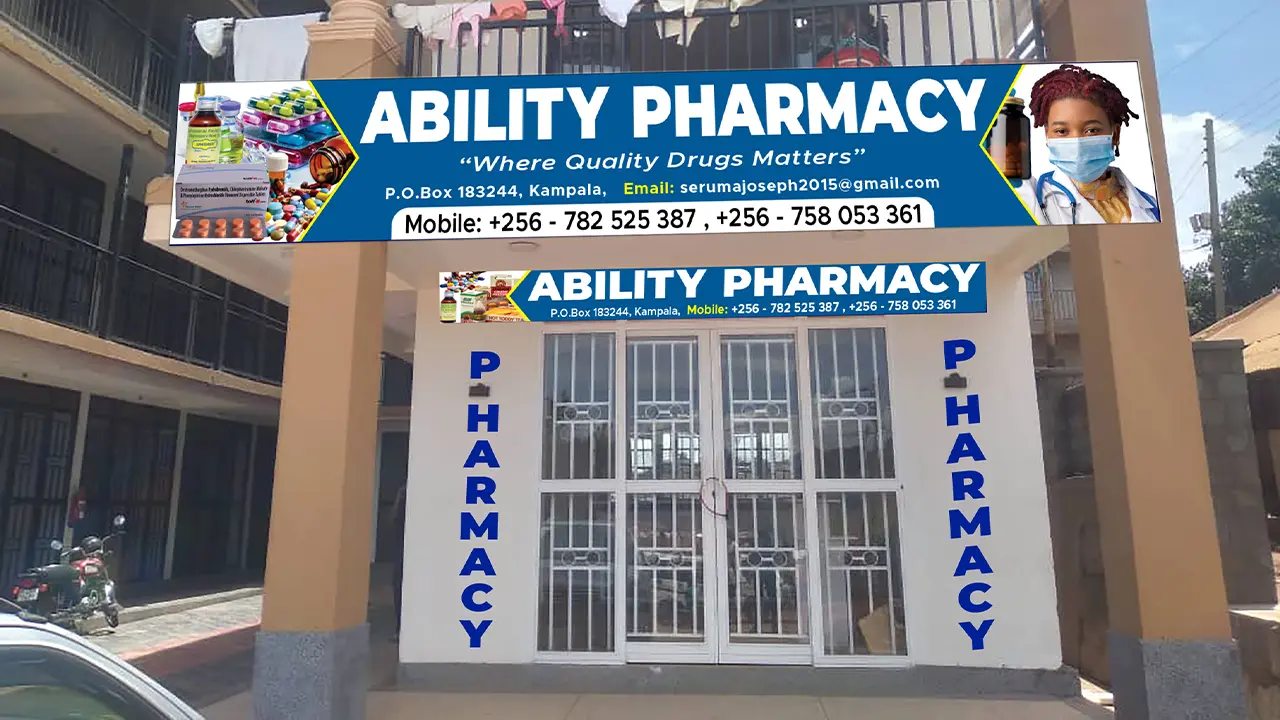
Ability Pharmacy
Especially relevant for businesses comparing visibility-led signage choices where clarity, trust and strong public-facing communication matter.
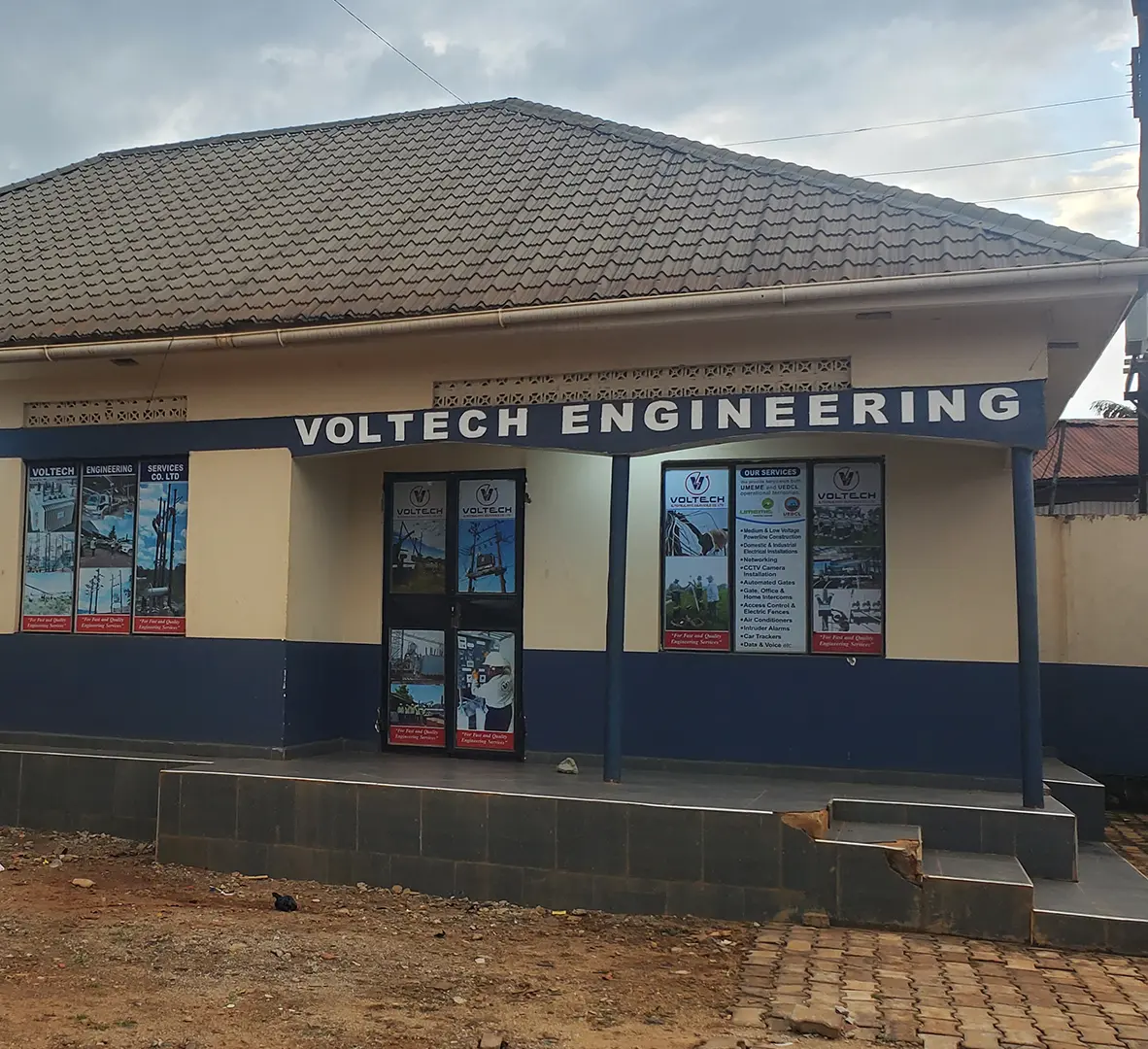
Voltech Engineering — Branding & Office Rollout
Useful for readers thinking about premium office presentation, dimensional branding and how signage becomes part of a larger professional environment.
3D Signage vs Light Boxes: Final Comparison
If your business wants stronger premium appearance, dimensional presence and cleaner office or reception branding, 3D signage often makes more sense. If your business needs clearer visibility during the day and especially after dark, a light box often becomes the stronger practical choice. Neither is automatically better in every case. The better option is the one that matches the job the sign needs to do.
Before deciding, think about the actual conditions. Is the location roadside or tucked into a quieter frontage? Does the business operate in the evening? Is the goal prestige, quick recognition or both? Are you branding one wall, one storefront or several spaces at once? The clearer those answers are, the easier it becomes to choose well.
Ready to choose the right sign for your business?
Whether you need a premium 3D office sign, an illuminated shop sign or a broader visibility setup across several touchpoints, we can help you choose the right approach from the start.
Related Posts
These articles help you understand the wider branding, visibility and production choices around signage and printed materials.
Signage Cost in Uganda
Helpful if you want to understand how materials, lighting, installation and finish level affect signage pricing.
Flyer vs Brochure Printing Kampala
A practical comparison to help businesses choose between flyers and brochures for marketing and promotions.
Branding, Printing & Signage in Uganda: Practical Guide
A broader guide for businesses coordinating branding, printing and signage instead of treating them as separate projects.
Branding Checklist for Kampala Businesses
Useful when signage is only one part of a larger branding system and rollout plan.
Related Services
If you already know what you need next, these are the most relevant service pages from this guide.
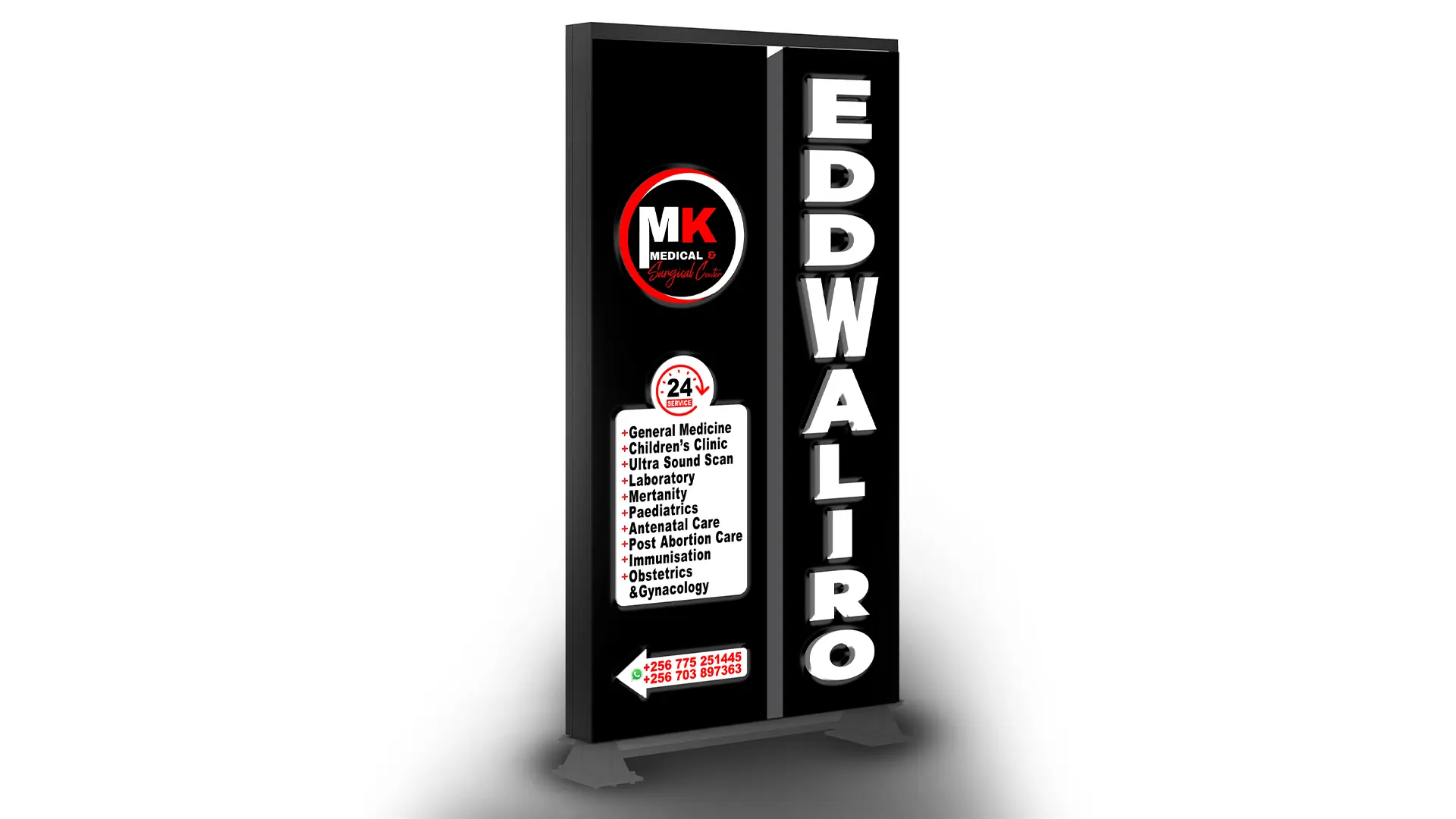
Signage & Branding Kampala
For storefront signage, office visibility, wall branding and practical production guidance across sign types.
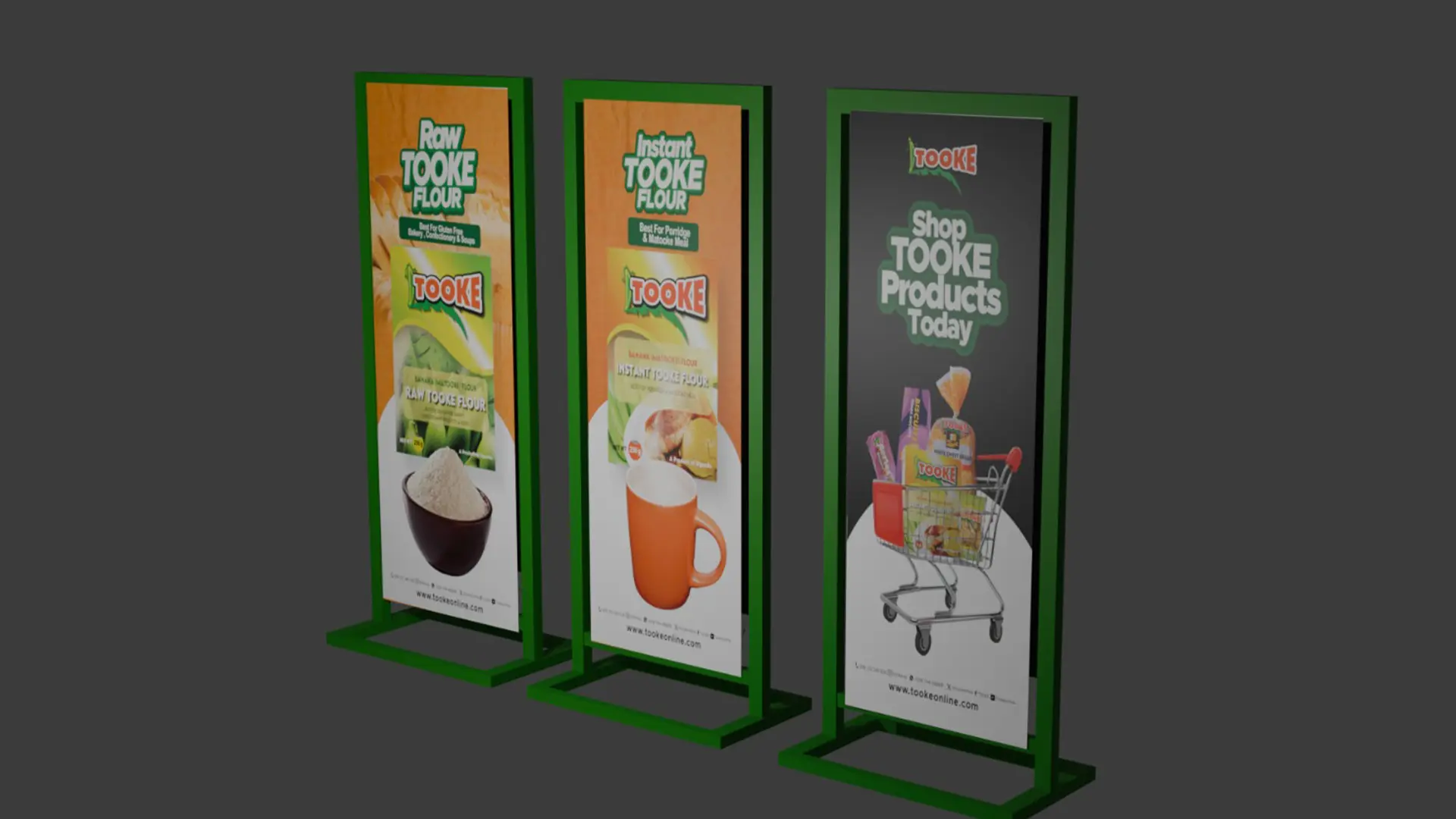
Outdoor Advertising Kampala
Relevant when visibility is more public-facing, roadside or campaign-driven beyond one simple frontage sign.
Corporate Brand Identity Design Kampala
Useful when the sign decision should reflect a stronger brand system rather than being handled as a one-off visibility item.
Frequently Asked Questions
Which is better in Uganda, 3D signage or a light box?
It depends on the business goal. If the priority is premium appearance and stronger dimensional branding, 3D signage often makes more sense. If the priority is visibility, especially at night, a light box often performs better. The best starting point is usually our Signage & Branding Kampala page.
Is 3D signage more expensive than a light box?
Not always. Some 3D signs cost more because of fabrication and finish, while some light boxes cost more once lighting, frame depth, electrical setup and installation are included. The better comparison is not category versus category, but scope versus scope. Our signage cost guide helps explain this further.
What businesses benefit most from light box signs?
Light boxes are often especially useful for pharmacies, shops, bars, restaurants and roadside-facing businesses because they stay visible in low-light conditions. For those kinds of projects, visibility often matters more than dimensional styling alone.
What businesses benefit most from 3D signage?
3D signage is often a strong fit for offices, reception spaces, hospitality settings and businesses that want a more premium, established appearance. It works even better when supported by a stronger identity system through corporate brand identity design and brand guidelines.
About the Publisher
Kamog Artistry (U) Ltd is a Kampala-based branding, graphic design, printing and signage company supporting businesses, institutions and event teams across Kampala, Wakiso, Mukono and Uganda.
We publish guides like this to help clients make clearer decisions before projects begin, especially where signage, branding, visibility and rollout all connect.
If you would like to learn more about the company or see the kind of work we handle, you can explore the pages below.